
Moving fuel from a portable container into a vehicle, generator, tractor, boat, or other equipment sounds simple, but the last few seconds of the transfer are often where problems happen. When the receiving tank fills faster than expected, a user may not stop the flow in time. The result can be splashing, overfilling, wasted fuel, and extra cleanup.
An automatic fuel transfer pump with a liquid sensor is designed to make this process easier to manage. Instead of relying only on constant manual observation, a sensor-equipped design adds another layer of control at the discharge end. For users who transfer fuel regularly, this can make everyday refueling feel cleaner, more predictable, and more convenient.
What Is an Automatic Fuel Transfer Pump?
An automatic fuel transfer pump is a portable electric pump that moves liquid from one container to another without hand siphoning or repeatedly lifting a heavy fuel can. Depending on the model, power may come from replaceable batteries, a rechargeable lithium battery, or a USB power connection.
The main benefit is simple: the pump does the transfer work while the user focuses on positioning the hose and monitoring the receiving tank. This is especially useful when refueling equipment with awkward filler locations or when the source container is too heavy to pour comfortably.
How Does a Liquid Sensor Help?
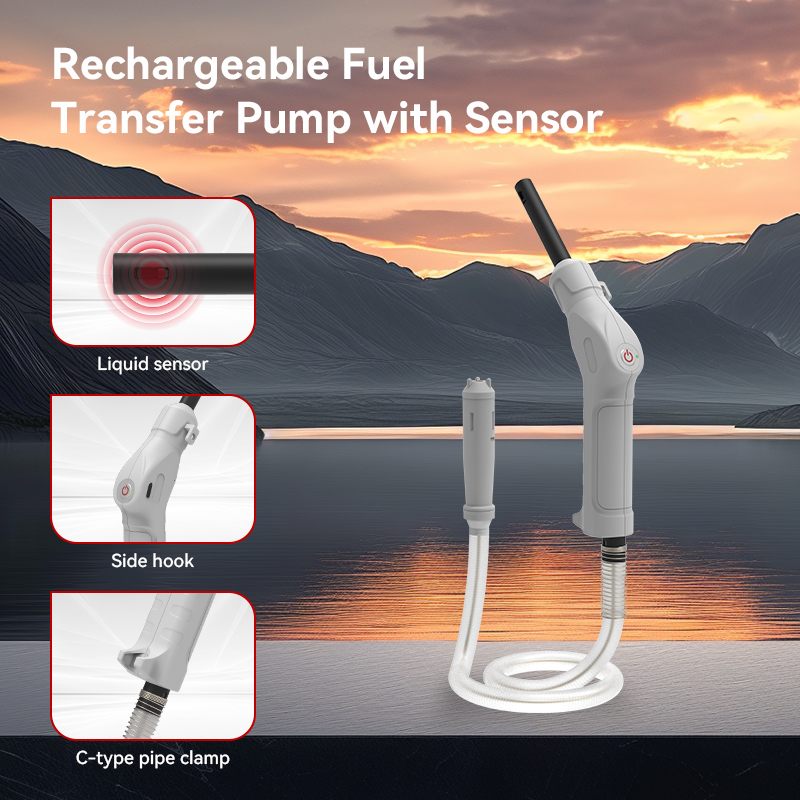
A liquid sensor is positioned near the discharge end of the pump system. When liquid reaches the sensor area, the pump can respond according to the product design. This type of feature is intended to reduce the need for the user to judge the exact stopping point only by sight.
It is important to treat the sensor as a convenience and control feature rather than a reason to leave a transfer unattended. Users should still stay beside the equipment, confirm that the hose is secure, and stop the process if anything looks unusual.
Why More Controlled Refueling Matters
Cleaner transfer is not only about appearance. Spilled fuel creates unnecessary waste, can leave strong odors on equipment or work surfaces, and increases the amount of cleanup after a simple refueling task. A more controlled transfer process helps users keep garages, workshops, farm areas, and outdoor workspaces better organized.
For businesses, a cleaner process also improves the overall user experience. Customers are more likely to value a fuel transfer pump that is easy to understand and requires fewer awkward steps than lifting, tipping, and balancing a fuel can over a small opening.
Rechargeable Power for Cordless Use
TOUKOO’s rechargeable fuel transfer pump platform is designed around portable operation. A built-in rechargeable lithium battery allows users to work without searching for a nearby wall outlet. On the current rechargeable configuration, the pump uses a 3000mAh battery system and supports Type-C charging.
This combination is useful for garages, farms, outdoor equipment, emergency kits, and mobile service situations. The pump can be charged in advance and carried with the rest of the user’s tools.
2.4 GPM Flow for Everyday Transfer Tasks
Transfer speed affects both convenience and control. A pump that is too slow can turn a routine refueling task into unnecessary waiting, while an excessively aggressive flow may be difficult to manage around small openings.
A flow rate of up to 2.4 gallons per minute provides a practical balance for many everyday applications. It is fast enough to reduce transfer time compared with manual pouring, while still allowing the user to guide the discharge hose carefully.
Practical Design Details: Side Hook, Pipe Clamp and Long Hose
Small design details can have a noticeable effect on daily usability. The side hook gives users an additional way to position or temporarily hang the pump when the working environment allows. This can be helpful when both hands are needed to organize the container and hose.
A C-type pipe clamp helps stabilize the hose connection and reduces unnecessary movement. The 59-inch discharge hose on the rechargeable model also provides additional reach when the receiving tank is not directly beside the source container.
Together, these details support the main goal of a portable pump: making fuel transfer easier without adding complicated setup.
Where Can a Sensor-Equipped Fuel Transfer Pump Be Used?
A portable automatic fuel transfer pump can be useful across several common scenarios:
Cars and motorcycles: transferring fuel from a portable gas can when direct pouring is inconvenient.
Boats and marine equipment: reaching tanks that may be located below deck level or farther from the container.
Tractors and agricultural machinery: refueling equipment in fields, sheds, or locations away from a fixed pump.
Generators and outdoor equipment: preparing backup power, lawn equipment, or job-site machinery.
Workshops and garages: moving compatible liquids between containers with better control than manual pouring.
Always confirm that the pump materials and configuration are suitable for the liquid being transferred. TOUKOO’s current fuel transfer pump range is designed for compatible liquids such as gasoline, diesel, kerosene, light oils, and non-potable water, depending on the model.
What to Look for When Choosing an Automatic Fuel Transfer Pump
Buyers should look beyond a single specification. Useful comparison points include the power source, hose length, flow rate, liquid compatibility, sensor or auto-stop features, handle design, and how easily the pump fits common fuel containers.
For distributors and private-label brands, the product should also be easy to explain at retail. Clear benefits such as rechargeable power, liquid sensing, a 59-inch hose, side hook, and 2.4 GPM flow can be communicated quickly on packaging, product pages, and marketplace listings.
For commercial sourcing, manufacturing support also matters. TOUKOO provides OEM and ODM services for customers who need customized branding, packaging, colors, specifications, or product configurations.
Frequently Asked Questions
Does a liquid sensor mean the pump can be left unattended?
No. A sensor can add convenience and help with flow control, but users should remain present during fuel transfer and follow the product instructions.
Is a rechargeable fuel transfer pump useful outdoors?
Yes. Rechargeable cordless power is particularly useful when a wall outlet is not available, including on farms, in outdoor work areas, in vehicle storage locations, and for emergency use.
What liquids can a portable fuel transfer pump handle?
Compatibility depends on the model. TOUKOO offers pumps designed for commonly transferred liquids, including gasoline, diesel, kerosene, light oils, and non-potable water. Always check the specifications before use.
A Better Way to Handle Everyday Fuel Transfer
The best fuel transfer solution is not necessarily the most complicated one. For many users, the biggest improvements come from simple features that reduce lifting, improve hose control, provide portable power, and make the stopping point easier to manage.
A rechargeable automatic fuel transfer pump with liquid sensor technology combines these advantages in one compact tool. For users, it can make refueling cleaner and more convenient. For distributors and brands, it creates a clear feature story that is easy to present across retail and online channels.
Explore TOUKOO portable fuel transfer pumps for available configurations, or contact our team for OEM, ODM, sample, and bulk-order requirements.