
A portable fuel transfer pump becomes most valuable when the same tool can handle different refueling situations. A car in the garage, a tractor in a field, a motorcycle with a narrow filler opening, and a boat at the dock all create different handling challenges. What they have in common is the need to move fuel from a container to equipment without repeatedly lifting and tipping a heavy can.
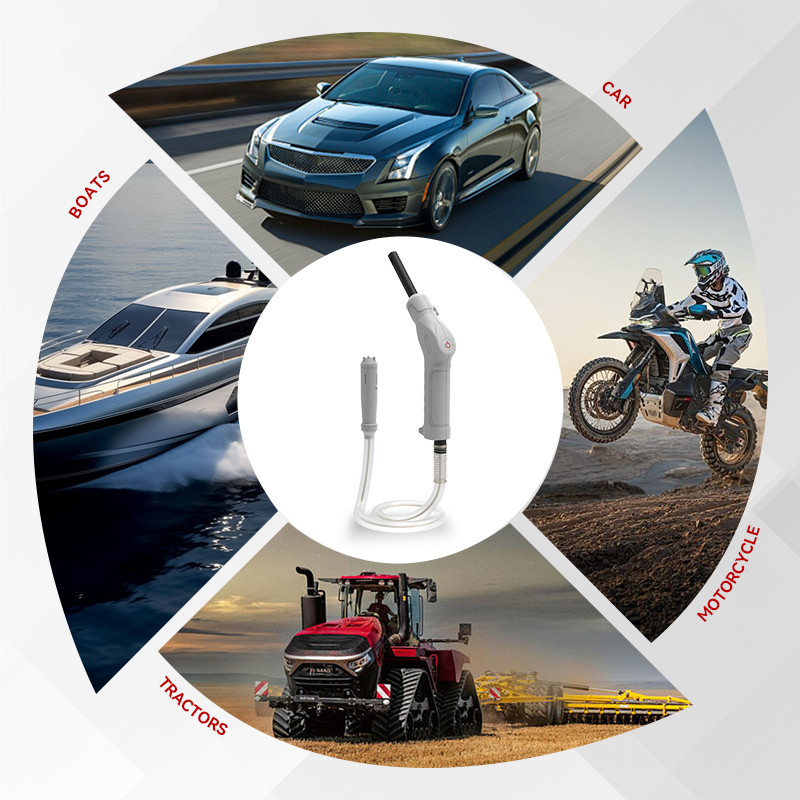
For users who manage several types of vehicles or equipment, portability, hose reach, power options, and flow control often matter more than a long list of complicated features. A well-designed portable fuel transfer pump can simplify routine refueling across automotive, agricultural, marine, outdoor, and workshop applications.
Why Use a Portable Fuel Transfer Pump Instead of Pouring?
Direct pouring is familiar, but it becomes inconvenient when the fuel can is heavy, the filler opening is small, or the tank is difficult to reach. Holding a container at an angle while trying to keep the spout aligned can lead to spills and unnecessary strain.
A portable electric transfer pump changes the process. The suction end stays in the source container while the discharge hose is placed at the receiving tank. The pump then moves the liquid through the hose, allowing the user to focus on positioning and control.
This is particularly useful for repeated refueling tasks. Instead of treating every fill as a lifting job, users can make the process more consistent.
Cars and SUVs
Vehicle refueling is one of the most common applications for a portable fuel transfer pump. A pump can be useful when transferring fuel from an emergency gas can, topping up a vehicle stored away from a fuel station, or managing fuel during maintenance.
A longer discharge hose makes it easier to place the source container on a stable surface instead of holding it above the vehicle. For users who keep emergency fuel at home, in a workshop, or on a work site, a cordless pump can become a practical part of the vehicle support kit.
Motorcycles, ATVs and Small Engines
Motorcycles, ATVs, lawn equipment, and other small engines often have smaller tanks and narrower filler openings. In these cases, control is especially important.
A portable pump with an ergonomic handle and manageable flow allows the user to guide the discharge hose more accurately than pouring from a large fuel can. Sensor-equipped or automatic-stop configurations can add another useful layer of control, while the user remains present and monitors the process.
Boats and Marine Equipment
Marine refueling often involves distance, awkward tank locations, and limited working space. Depending on the boat layout, the fuel source may need to remain on the dock or deck while the receiving tank is located farther away.
A flexible hose and cordless power can make the process more convenient. The rechargeable TOUKOO configuration uses a 59-inch discharge hose, giving users additional reach without relying on a nearby power outlet.
Before use around marine equipment, users should always confirm that the selected pump and liquid are compatible with the application and follow appropriate fuel-handling practices.
Tractors and Agricultural Equipment
Farms are a natural use case for portable fuel transfer equipment because tractors, mowers, generators, and other machines may operate far from a fixed refueling station.
A battery-powered or rechargeable fuel transfer pump allows the user to carry fuel and the transfer tool directly to the machine. This can reduce the need to move equipment only for refueling and can be especially helpful during seasonal work when downtime matters.
The same logic applies to landscaping equipment, compact machinery, and maintenance tools stored across a large property.
Generators and Emergency Power
Portable generators are often stored for backup use and may need to be refueled during a power outage or at a remote location. In that situation, simple cordless operation becomes more important than ever.
A rechargeable fuel transfer pump can be charged in advance and stored with emergency supplies. Replaceable-battery models offer a different advantage: fresh batteries can be installed quickly when recharging is not available.
For emergency-preparedness customers, offering both power styles can be useful because each supports a different type of readiness plan.
Construction and Job-Site Equipment
Construction sites often include generators, compact equipment, temporary lighting, and machinery that need fuel where they are being used. A portable pump reduces dependence on moving the equipment to a fixed source.
For professional buyers, durability, hose reach, liquid compatibility, and ease of storage become important purchasing factors. Clear operating instructions and simple product design are also valuable when the same tool may be used by different team members.
Garages, Workshops and Home Use
A fuel transfer pump does not have to be limited to large machinery. Home users and workshops may use a portable pump for routine vehicle care, outdoor equipment, generators, and other compatible liquid-transfer tasks.
The compact size of battery-powered pumps makes them easier to store than larger transfer systems. Users can keep the pump with fuel containers, maintenance tools, or emergency equipment and bring it out only when needed.
What Features Matter Across Different Applications?
Although each use case is different, several features are broadly useful.
Cordless power: Rechargeable lithium or AA-battery operation allows the pump to work away from an outlet.
Hose reach: A longer discharge hose gives the user more freedom to keep the source container stable.
Flow rate: TOUKOO offers configurations around 2.4 GPM as well as other models with higher flow specifications, allowing buyers to choose according to their application.
Liquid compatibility: Depending on the model, pumps may be suitable for gasoline, diesel, kerosene, light oils, and non-potable water.
Ergonomic handling: A comfortable grip, manageable weight, and simple button control make repeated use easier.
Additional control features: Liquid sensors, automatic-stop functions, hose clamps, and side hooks can improve convenience in specific models.
One Product Category, Different Buyer Priorities
End users are not the only audience for portable fuel transfer pumps. Retailers, distributors, tool brands, automotive-accessory sellers, marine suppliers, and agricultural equipment channels may all evaluate the same product differently.
An automotive retailer may prioritize compact storage and gasoline transfer. A farm supplier may care more about cordless operation and repeated use around equipment. A marine retailer may highlight hose reach. A private-label brand may focus on packaging, product color, feature configuration, and differentiation from competing models.
This is why a flexible product family can be more valuable than a single fixed configuration.
For Distributors and Private-Label Brands
TOUKOO manufactures portable liquid and fuel transfer pumps and supports OEM/ODM requirements. Depending on the project, customization can include branding, packaging, colors, specifications, and product configurations.
For sourcing teams, it is useful to define the target channel before choosing the pump. Consider where customers will use it, what power source is most convenient, whether sensor or automatic-stop functionality is needed, and which hose length best matches the application.
Frequently Asked Questions
Can one fuel transfer pump be used for cars and tractors?
A portable pump can serve multiple equipment types as long as the selected model is compatible with the liquid and the physical setup works for the source and receiving tank.
Is a long hose important?
It can be. A longer hose allows the fuel container to remain on a stable surface while reaching tanks that are higher, farther away, or positioned awkwardly.
Which is better for outdoor use: rechargeable or AA battery power?
Both can work well. Rechargeable models are convenient for frequent use, while AA-battery models are useful where replacement batteries are easier to carry than charging equipment.
Can portable pumps transfer liquids other than gasoline?
Some models support diesel, kerosene, light oils, and non-potable water in addition to gasoline. Compatibility should always be verified for the specific model.
A Flexible Tool for Multiple Refueling Scenarios
The strongest reason to choose a portable fuel transfer pump is not that every application is identical. It is that the same basic tool can adapt to many common refueling situations.
Cars, motorcycles, boats, tractors, generators, and job-site equipment all benefit from a transfer method that reduces lifting and gives the user better control over the hose. By choosing the right power option, hose length, flow rate, and control features, users can build a practical solution around the equipment they actually use.
Explore TOUKOO portable fuel transfer pump options for different power and feature configurations, or contact our team to discuss OEM/ODM and bulk sourcing requirements.