
A fuel transfer pump can look simple on the outside, but small design details often make the difference between a smooth refueling and a messy one. The headline features — flow rate, battery, and hose length — get most of the attention, while a few quieter parts do important work during every use.
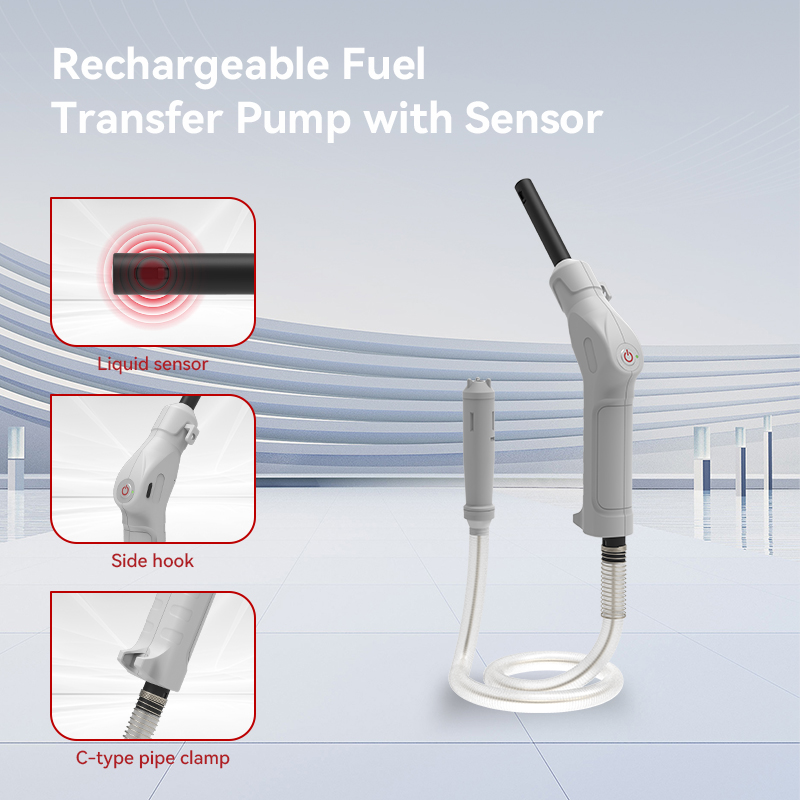
This article explains three design details on the TOUKOO rechargeable fuel transfer pump: the liquid sensor, the side hook, and the C-type pipe clamp. Each one addresses a specific annoyance, and together they make the pump easier to use, cleaner to store, and more durable over time.
1. Liquid Sensor: Automatic Shut-Off
The liquid sensor sits near the discharge end of the pump. When the receiving tank fills and liquid reaches the sensor, the pump stops automatically according to the product design.
This matters most during the final seconds of a transfer, when a tank can fill faster than expected. Without a sensor, those last moments often cause overfilling, splashing, and wasted fuel. The sensor removes much of the need to guess when to stop.
It is important to treat the sensor as a convenience and control feature, not as a reason to leave a transfer unattended. You should still stay beside the equipment, confirm the hose is secure, and stop the process if anything looks unusual. You can read more about how sensor technology reduces spills in our article on automatic fuel transfer pumps and liquid sensor technology, How Liquid Sensor Technology Helps Reduce Spills.
2. Side Hook: Easy Storage and Access
The side hook on the pump body gives you a place to hang the pump when it is not in use. Instead of setting it loose on a shelf or leaving it in a toolbox where the hose can kink and the nozzle can get dirty, you can hang it on a pegboard, a shelf edge, or a hook in a garage or workshop.
This keeps the hose out of the way and the pump ready for the next job. For anyone who refuels equipment regularly, quick access matters — a pump that is always visible and easy to grab is a pump that actually gets used.
3. C-Type Pipe Clamp: Secure Hose Routing
The C-type pipe clamp holds the hose in place during storage and transport. A loose hose can tangle, kink, or get caught on other equipment, and a damaged hose affects both performance and safety.
The clamp keeps the hose tidy and reduces the risk of damage, so the pump stays in good working condition longer. It is a small part, but it protects one of the most important components of the whole system.
How These Details Work Together
Each feature addresses a specific pain point:
- The sensor tackles overfilling and the cleanup that follows.
- The hook tackles untidy storage and lost access.
- The clamp tackles tangled hoses and transport damage.
Together they make the pump feel more finished and easier to live with — the kind of small engineering that separates a well-designed tool from a basic one. When you evaluate a fuel transfer pump, look past the headline numbers and pay attention to these supporting details.
Why Design Details Matter for Resellers and Brands
For dealers, distributors, and private-label customers, these details also matter commercially. Features like automatic shut-off, a storage hook, and a hose clamp are concrete, easy-to-explain selling points that can be shown on packaging, product pages, and e-commerce listings.
If you are building your own brand, the ability to customize these elements matters. TOUKOO offers OEM/ODM services OEM/ODM & Product Customization covering brand logo, packaging, color, specifications, and product configuration.
What to Look for When Comparing Pumps
When comparing fuel transfer pumps, consider both the headline specifications and these supporting features:
- Does it have automatic shut-off or a liquid sensor? This affects how cleanly the transfer ends.
- How does it store? A hook or mounting option keeps the hose tidy and the pump accessible.
- How is the hose managed? A clamp or clip protects the hose during storage and travel.
- Are the details standard or optional? Well-designed pumps include these touches by default.
You can compare these features across the TOUKOO fuel transfer pump range TOUKOO Product Range.
Frequently Asked Questions
Does the liquid sensor mean I can walk away during a transfer? No. The sensor improves convenience and control, but you should always stay near the equipment and follow the product instructions during any fuel transfer.
Is the side hook strong enough to hold the pump? The hook is designed to hold the pump’s own weight during storage. It is a storage aid, not a lifting or carrying point.
Does the C-type clamp fit every hose? The clamp is designed for the hose supplied with the pump. Use it to keep that hose tidy and protected during storage and transport.
Are these details worth paying attention to when buying? Yes. Features like automatic shut-off, storage hooks, and hose clamps affect how the pump feels to use every day, not just on paper.
Bottom Line
When you compare fuel transfer pumps, look past the headline numbers. The liquid sensor, side hook, and C-type pipe clamp each address a specific frustration, and together they make a pump that is easier to use, cleaner to store, and more durable over time. The TOUKOO model includes these thoughtful touches as standard.
Explore the TOUKOO rechargeable fuel transfer pump with sensor, or reach out for a free sample or an OEM/ODM consultation.