
Moving fuel from a can into a vehicle, generator, or piece of lawn equipment looks simple in theory, but the physical reality is often different. The can is heavy, the tank opening is small, and the last few seconds of pouring are exactly when spills tend to happen. A rechargeable fuel transfer pump with sensor is designed to take most of that effort away. Instead of lifting and tilting a full container, you position the pump, press a button, and let it move the liquid for you.
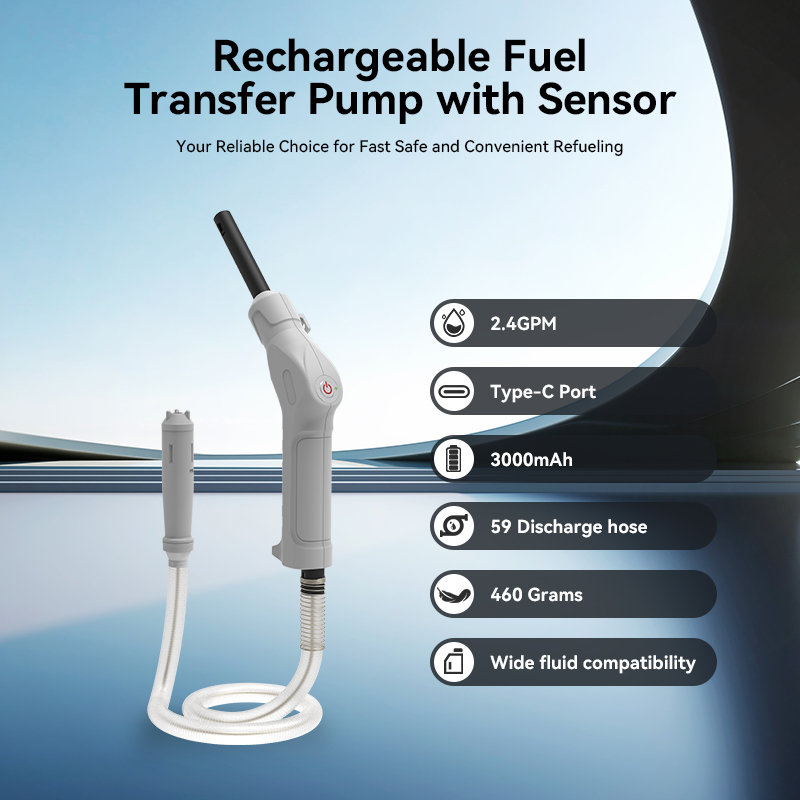
This article explains the complete specifications of the TOUKOO rechargeable fuel transfer pump with sensor, and more importantly, what each specification actually means in everyday use. Understanding these details helps you decide whether this model matches the refueling jobs you face most often.
A Specification Overview
The model shown in this article is built around a compact, cordless design. Its headline specifications are:
- Flow rate: 2.4 GPM — a balanced transfer speed for everyday equipment.
- Battery: 3000 mAh rechargeable — enough capacity for routine jobs between charges.
- Charging: USB Type-C — recharges from common wall adapters, power banks, or vehicles.
- Discharge hose: 59 inches — reaches from the can to the tank without awkward positioning.
- Weight: 460 grams — light enough to hold comfortably for longer tasks.
- Wide fluid compatibility — works with gasoline, diesel, kerosene, light oils, and non-potable water.
These numbers only tell part of the story. Below, we explain what each one contributes to a smoother refueling experience.
What 2.4 GPM Means in Practice
Flow rate is measured in gallons per minute, and it directly affects how the transfer feels. A pump that is too slow turns a quick job into a waiting game. A pump that is too fast can be hard to control when the receiving tank is small or the filler opening is narrow.
A rated flow of about 2.4 GPM sits in a practical middle ground. It moves fuel quickly enough to fill a generator, snow blower, or lawn tractor tank in a reasonable time, yet gently enough that you can control the final seconds and stop cleanly. Actual flow can vary with liquid type, battery level, hose layout, and lift height, so the rating is best understood as a reference point rather than an absolute guarantee in every condition.
The 3000 mAh Battery and Type-C Charging
Power supply is one of the most common frustrations with portable tools. A pump is only useful if it has charge when you need it.
The 3000 mAh rechargeable battery in this model provides enough capacity for routine refueling jobs, and the USB Type-C charging port makes keeping it topped up simple. Type-C is now the standard for phones, tablets, and many other devices, which means the same cable and charger you already use can often power this pump. You can recharge from a wall adapter at home, a power bank in the field, or a vehicle outlet, so the pump stays ready even when you work away from a fixed power source.
The 59-Inch Discharge Hose
Hose length changes how you can position the pump. A short hose forces the fuel can to sit close to the tank, or worse, be lifted up to reach it. A longer hose gives you room to work.
The 59-inch discharge hose on this model lets you keep the source container on a stable, level surface while the hose reaches a generator tank, a vehicle filler, or a piece of equipment parked in a tight spot. This is one of the quiet advantages of a well-designed portable pump — you do most of the work from a comfortable, controlled position.
A 460-Gram Body for Comfortable Handling
Weight matters more than it first appears. During a transfer, you hold the pump while guiding the hose, and a heavy body makes your arm tire quickly. Fatigue reduces control, and reduced control leads to spills.
At 460 grams, this pump is roughly the weight of a full water bottle. That lightness keeps the job comfortable, whether you are topping up a single generator or working through several pieces of equipment in one session. It is also easier to manage while wearing gloves in cold weather, which we discuss in a separate article on lightweight refueling.
Wide Fluid Compatibility
Not every pump is suitable for every liquid. This model is designed to handle gasoline, diesel, kerosene, light oils, and non-potable water, which covers most common transfer needs around a home, farm, workshop, or boat. Always confirm the specific liquid against the manufacturer’s specifications before use, and keep flammable liquids away from ignition sources during any transfer.
Who Benefits Most from These Specs
- Homeowners refueling generators, lawn mowers, and snow blowers during seasonal maintenance or outages.
- Farmers and ranchers moving fuel to tractors and small equipment located away from a fixed fuel point.
- Boat owners filling tanks at the dock, on a trailer, or in a slip where space is limited.
- Workshop and maintenance staff transferring compatible liquids between containers in a controlled way.
What to Check Before You Buy
Specifications are useful only when they match your real workload. Before choosing a rechargeable fuel transfer pump, review these points:
- Liquid compatibility — confirm the pump is rated for the fuel or liquid you actually use.
- Flow rate — match the speed to the size of the tanks you fill.
- Power and charging — check battery capacity and whether the charging method fits your routine.
- Hose length — make sure it reaches from where your container sits to where the tank is.
- Weight and grip — if you refuel often, a lighter, ergonomic body is worth prioritizing.
You can compare available models and their full specifications in the TOUKOO product range Rechargeable Fuel Transfer Pump with Sensor.
Frequently Asked Questions
Is a higher flow rate always better? Not always. A very high flow rate can be harder to control when filling small tanks or narrow openings. A moderate rate like 2.4 GPM balances speed with control for most everyday tasks.
Can I charge the pump from my phone charger? In most cases, yes. The USB Type-C port is designed to work with common Type-C chargers, but you should follow the charging guidance provided with the specific model.
Does the 59-inch hose work for every tank? The hose is long enough for most portable refueling jobs, but reach also depends on where you place the container. Keep the can stable and let the hose do the reaching.
Is the pump suitable for outdoor use? Yes. The cordless, rechargeable design is particularly suited to farms, work sites, and emergency situations where a fixed power outlet is not nearby.
Bottom Line
A rechargeable fuel transfer pump with sensor turns a tiring, spill-prone chore into a one-button routine. By understanding what the 2.4 GPM flow rate, 3000 mAh battery, Type-C charging, 59-inch hose, and 460-gram weight each contribute, you can confidently match the right pump to your own refueling needs.
Explore the full TOUKOO range, or contact us for a sample or an OEM/ODM quote.