
A portable fuel transfer pump can make everyday refueling much easier than lifting and pouring from a heavy container, but good results still depend on correct setup. The pump, hose, source container, and receiving tank all need to be positioned properly before the transfer begins.
This guide explains a practical step-by-step process for using a battery-powered or rechargeable fuel transfer pump more cleanly and consistently. Exact operating details can vary by model, so users should always follow the instructions supplied with their specific pump.
Before You Start: Check the Liquid and Equipment
The first step is to make sure the selected pump is intended for the liquid you plan to transfer. Portable fuel transfer pumps are commonly used with gasoline, diesel, kerosene, light oils, and, on compatible models, non-potable water.
Do not assume that every pump is suitable for every liquid. Check the manufacturer’s compatibility information and avoid liquids that are outside the product specification.
Next, inspect the pump, hose, connections, and power source. Look for visible damage, loose parts, cracked tubing, or contamination that could affect operation. If the pump is rechargeable, confirm that the battery has sufficient charge. If it uses replaceable batteries, confirm that they are installed correctly and have enough power for the task.
Step 1: Place the Source Container on a Stable Surface
Start with the fuel can or source container in a stable, upright position. A level surface reduces the chance that the container will shift while the pump is operating.
One of the main advantages of using a portable transfer pump is that the source container usually does not need to be lifted above the receiving tank. Keeping the container low and stable can make the entire process easier to control.
Step 2: Insert the Suction End Correctly
Place the suction end into the source container according to the pump design. Make sure the intake is positioned where it can remain in contact with the liquid during operation.
If the model includes an adapter, flexible intake section, or locking component, fit it correctly before starting. A secure setup helps prevent unnecessary movement and keeps the pump in a predictable working position.
Step 3: Position the Discharge Hose in the Receiving Tank
Guide the discharge hose to the filler opening of the vehicle, generator, tractor, boat, or other equipment.
The hose should be positioned securely enough that it will not easily slip out during transfer. If the model includes a clamp or other holding feature, use it when appropriate. A longer hose can be especially useful because the source container can stay on the ground while the user reaches a higher or less accessible tank.
Step 4: Check the Working Area
Before turning on the pump, take a few seconds to look around the transfer area. Keep the pump and hose away from unnecessary obstacles, make sure the receiving container has enough capacity, and avoid stretching the hose so tightly that it may pull free.
Fuel transfer should be done in an appropriate environment with the user present and attentive throughout the process. Follow the safety guidance supplied with the equipment and observe any local requirements for handling fuel.
Step 5: Start the Pump and Watch the Flow
Turn on the pump using the model’s control button. Allow the flow to stabilize while keeping one hand available to guide the discharge hose if necessary.
Do not walk away after the pump starts. Watch the receiving tank and the hose position. Even when using a pump with a liquid sensor or automatic-stop feature, active supervision remains important.
A portable pump is designed to reduce manual effort, not eliminate user responsibility.
Step 6: Slow Down Your Attention Near the Full Level
As the receiving tank approaches the desired level, pay closer attention. On sensor-equipped models, the liquid sensor can provide an additional layer of control according to the product design. On standard models, the user should stop the pump manually at the appropriate time.
Avoid filling beyond the recommended level of the receiving equipment. Leaving appropriate space and stopping at the correct point helps prevent overflow.
Step 7: Stop the Pump Before Removing the Hose
Once the required amount has been transferred, switch off the pump before taking the discharge hose out of the receiving tank.
Allow any remaining liquid in the hose to finish moving according to the instructions, then carefully remove and position the hose so that residual liquid does not drip onto equipment or the ground.
Step 8: Remove the Pump and Store It Properly
After the transfer is complete, remove the suction end from the source container carefully. Follow the product instructions for draining, cleaning, and storage.
Keep the pump in a dry, suitable location away from unnecessary dirt and damage. Rechargeable models should be charged and stored according to the manufacturer’s instructions. For AA-battery models, follow the recommended battery-storage practices, particularly if the pump will not be used for an extended period.
How Design Features Can Make the Process Easier
Several design details can improve everyday handling.
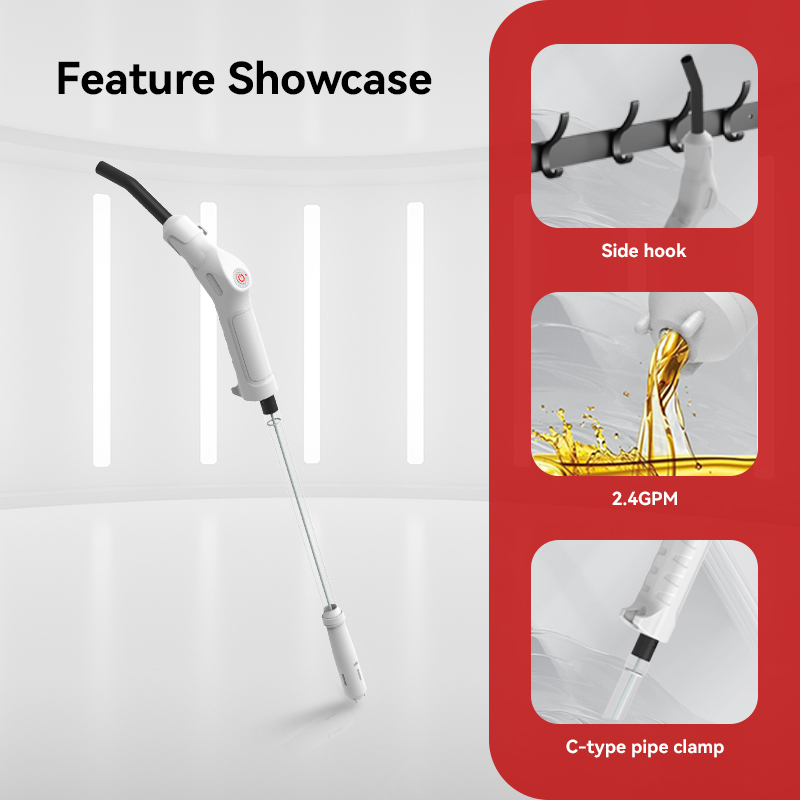
A 59-inch discharge hose provides extra reach for tanks that are not directly beside the fuel can. A side hook can offer an additional placement option when the pump is not actively being held. A C-type pipe clamp can help stabilize the hose. An ergonomic handle makes the unit easier to control during setup and transfer.
On TOUKOO’s rechargeable configuration, 2.4 GPM flow provides useful speed for common tasks, while the 3000mAh rechargeable battery and Type-C charging support cordless use.
These features do not replace proper operating practice, but they can make the process more convenient.
Common Mistakes to Avoid
Lifting the container unnecessarily: One reason to use a transfer pump is to reduce heavy lifting. Keep the source container stable whenever the setup allows.
Using an incompatible liquid: Always check the product specification before transfer.
Starting before the hose is secure: A loose discharge hose can create a mess quickly. Position it properly before switching on the pump.
Leaving the pump unattended: Even sensor-equipped pumps should be monitored during operation.
Ignoring battery condition: Low battery power may affect the consistency of operation. Charge rechargeable models in advance or keep suitable replacement batteries available.
Storing the pump carelessly: Proper storage helps protect the hose, connections, and pump body for the next use.
How to Choose a Pump That Is Easier to Use
For buyers comparing portable fuel transfer pumps, ease of use is more than a marketing phrase. Look for a design that matches the most common working situation.
Consider the hose length, power system, flow rate, grip, intake design, compatible liquids, and any sensor or auto-stop features. If the pump will be carried in a vehicle or used outdoors, compact storage and cordless operation may be particularly important.
For commercial buyers, clear instructions and intuitive features can also reduce customer-service questions after the sale.
Frequently Asked Questions
Do I need to lift the gas can when using a portable transfer pump?
In many setups, no. The source container can remain on a stable surface while the pump moves fuel through the hose.
Should I stay beside the pump while it is running?
Yes. Portable transfer pumps should be monitored during use, including models with liquid-sensing or automatic-stop functions.
How should I prepare a rechargeable pump for storage?
Follow the model instructions, keep the pump clean and dry, and maintain the battery according to the manufacturer’s storage guidance.
Can the same operating steps be used with every model?
The general workflow is similar, but controls, adapters, sensor functions, and maintenance requirements can differ. Always follow the instructions for the specific product.
Simple Setup Leads to Better Fuel Transfer
A portable fuel transfer pump is most useful when it reduces effort without adding complexity. A stable source container, correctly positioned intake, secure discharge hose, active monitoring, and proper shutdown are the foundations of a clean transfer process.
Once these habits become routine, users can benefit more fully from cordless power, longer hose reach, practical flow rates, and sensor-equipped features.
Browse TOUKOO portable fuel transfer pumps to compare available configurations, or contact our team for product selection, OEM/ODM, and bulk-order support.