
Refueling vehicles, generators, and lawn equipment can take time and effort. Heavy fuel cans can also be hard to handle. A portable pump offers a more convenient way to transfer compatible liquids.
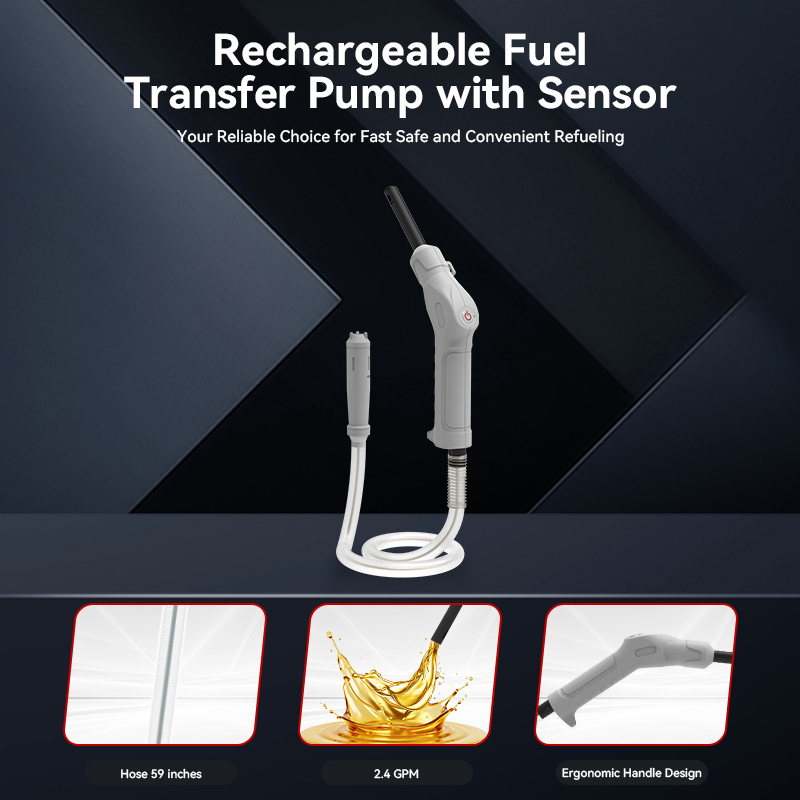
A rechargeable fuel transfer pump with sensor combines portable power with useful features for everyday refueling. The model shown here has a 59-inch hose, a rated flow of 2.4 gallons per minute (GPM), and an ergonomic handle.
In this guide, we look at four key features and explain what to check before you choose a fuel transfer pump.
1. Sensor Technology for Better Control
Fuel transfer requires care. Overfilling a tank can cause spills and create safety risks. Sensor technology may help users manage the transfer process.
The sensor function varies by model. Some sensors detect liquid levels or help control when the pump stops. Check the product specifications to learn how the sensor works on your chosen model.
This feature may help during routine refueling for generators, lawn equipment, and other compatible machines. However, never rely on a sensor alone to prevent spills. Follow the manufacturer’s instructions and stay near the pump during use.
2. Rechargeable Power for Greater Flexibility
A portable pump can be useful in a garage, garden, workshop, or outdoor work area. These places may not have a power outlet nearby.
A rechargeable fuel transfer pump gives you more freedom when you work away from a fixed power source. Charge the battery before use, then take the pump where you need it.
Before you buy, check the battery capacity, charging method, and expected runtime. Also, see whether the model supports another power source. These details can help you choose a pump that fits your daily needs.
Explore the TOUKOO Portable Fuel Transfer Pump Range to compare available models and their features.
Always confirm that the pump suits your intended liquid and working conditions.
3. A 59-Inch Hose for Easier Reach
Hose length can make a big difference during fuel transfer. A short hose may limit where you can place the pump. A longer hose gives you more room to work.
The model shown in the product image has a 59-inch discharge hose. This extra reach can help when the pump and receiving container sit apart.
A longer hose may also help when you refuel generators, lawn equipment, and other compatible machines. It gives you more flexibility in tight work areas.
However, hose length alone does not determine pump performance. The liquid, pump design, hose setup, and transfer height all affect flow. Keep the hose free of kinks and check all connections before use.
When choosing a portable fuel transfer pump, consider your usual work area. Make sure the hose can reach the transfer point without stretching or bending too much.
4. 2.4 GPM Flow and an Ergonomic Handle
The product image lists a rated flow of 2.4 gallons per minute (GPM). It also shows an ergonomic handle.
Flow rate tells you how fast a pump can move liquid under set test conditions. A higher rate may reduce waiting time. However, the liquid, battery level, hose setup, and transfer height can all affect actual flow.
Use the rated flow as a guide when comparing pumps. Check the product specifications for test conditions. Do not assume the pump will always reach its rated flow in every setup.
The handle matters, too. An ergonomic design can make the pump easier to hold and guide. This can help when you need to control the hose during refueling.
Together, the flow rate and handle design can make routine maintenance more convenient.
For more details, read High-Efficiency Rechargeable Fuel Transfer Pump Delivers Faster Liquid Transfer .
Where Can You Use a Portable Fuel Transfer Pump?
A portable pump can help with many tasks, but you must choose a model that suits the liquid and the job.
- Automotive maintenance: Transfer compatible liquids between approved containers and suitable receiving points.
- Lawn and garden equipment: Move suitable liquids for compatible outdoor machines.
- Generators: Transfer fuel from a suitable container when preparing or maintaining equipment.
- Workshops and farms: Use a portable pump when several machines need regular service.
- Outdoor equipment: Move compatible liquids when equipment sits far from a fixed refueling point.
Not every pump works with every liquid. Check the product details before use. Make sure the pump, hose, and container suit the liquid you plan to transfer.
You can also read Portable Fuel Transfer Pump Applicable to Various Fuel Transfer Scenarios for more information about choosing a pump for different tasks.
What Should You Check Before Buying?
Before you choose a rechargeable fuel transfer pump, review these six points.
1. Liquid compatibility
Check which liquids the pump can handle. Do not assume every portable pump works with gasoline or other flammable liquids.
2. Sensor and shutoff functions
Find out what the sensor detects. Check whether the pump stops automatically and how this feature works.
3. Flow rate
Compare the rated flow in GPM or liters per minute. Remember that real-world performance can vary.
4. Hose length
Choose a hose that reaches your usual transfer point. Avoid setups that force the hose to bend or kink.
5. Power and charging
Check battery capacity, charging needs, and expected runtime. Also, see if the model supports another power source.
6. Handling and storage
Look at the handle, size, and weight. Choose a pump that you can hold, move, and store with ease.
Businesses that buy pumps for resale should also check product quality. Make sure the specifications stay consistent. Review the product documents and quality control process, too.
Visit the TOUKOO product range to compare available options for your needs.
Fuel Transfer Safety Tips
Always put safety first when handling fuel. Gasoline and other flammable liquids need careful handling. Their vapors can catch fire, and contact with these liquids can cause harm.
Follow these basic safety tips:
- Work in a well-ventilated area.
- Keep fuel away from flames, sparks, and smoking.
- Turn off equipment and let hot engines cool before refueling.
- Use a pump, hose, and container that suit the intended liquid.
- Check all connections before you start.
- Stay near the pump during the transfer.
- Stop the pump if you notice a leak or spill. Follow the proper safety steps before you continue.
For more information about fuel-related safety risks, read the CDC’s safety guidance. Always follow the pump instructions and local safety rules.
A sensor may help with fuel transfer, but it cannot prevent every spill or accident. Never leave the pump unattended while it operates.
Conclusion
A rechargeable fuel transfer pump can make everyday liquid transfer easier. It can reduce manual effort and give you more flexibility when working with compatible equipment.
The model shown in this guide features sensor technology, rechargeable power, a 59-inch discharge hose, and a rated flow of 2.4 GPM. Its ergonomic handle also helps users hold and guide the pump.
Before you buy, check liquid compatibility, battery performance, hose length, and sensor functions. Choose a model that fits your equipment and follow all product safety instructions.
Explore the TOUKOO Portable Fuel Transfer Pump Range to compare available models and find the right option for your needs.